
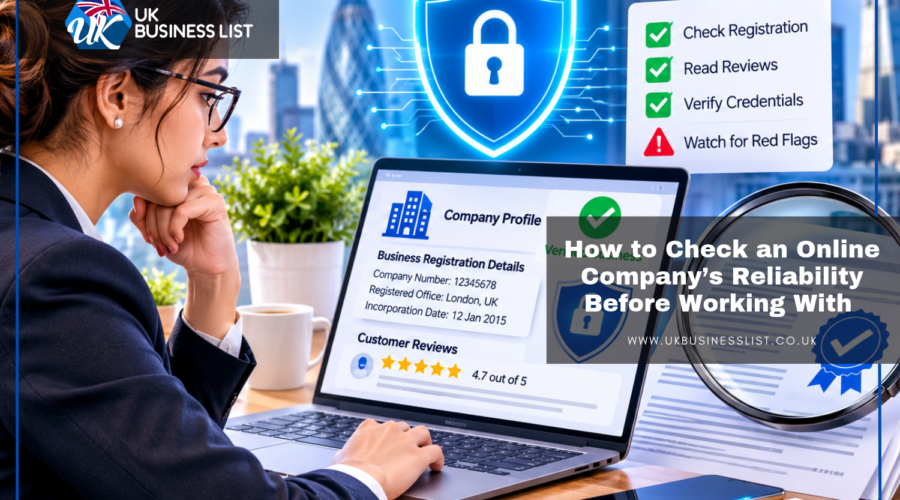
How to Check an Online Company’s Reliability Before Working With
Working with a company you know only through its website can carry risks.
A few simple checks before paying, sharing personal information or signing an agreement can help identify potential scams and unreliable businesses.
A reliable assessment should consider its legal identity, reputation, financial position and business practices.
1. Check the Company’s Identity and Business Information
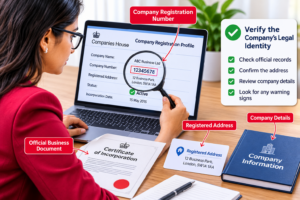
Firstly, verify that the firm exists and that the information provided on their website is consistent with their records. Ask the company for its full legal name, registration number, and registered address. Make sure this information is available on their website and in the agreement.
Check that the contact information is correct. Make sure there’s a real street address, a phone number or email, and that the domain name matches the firm’s name. Many countries provide official business registers, although the information available and the rules for accessing it vary. Where possible, use the relevant government registers to verify the company’s details.
In the UK, you can verify most basic company details for free using official sources. Start with these three checks:
- Companies House: the free register shows a company’s status, registered office, officers, filing history, and previous names, as explained on UK.
- Website details: limited companies are expected to display their registered name, registration number, and registered office, according to Business Companion.
- VAT number: if one is quoted, the GOV.UK checker shows the name and address it is registered to.
If the details from these sources do not match, treat it as a warning sign. Ask the company to explain the difference before you pay or share any data. Matching registration details help confirm that the company exists, but they do not prove that the website or person contacting you genuinely represents it. They also say little about the company’s service quality or financial stability.
Such habit helps adults weigh promotions like the 70 free spins no deposit no wager offers reviewed by Slotozilla, where the operator matters as much as the bonus. No single factor can establish whether a business is trustworthy.
2. Check the Company’s Reputation and Track Record

Reputation is what customers and partners say, so read it critically instead of trusting the star rating. Look at recent and middling reviews, check whether the details are specific, and see how the company responds to complaints. Citizens Advice suggests looking for reviews on several sites, and not only the company’s own.
Searching the company name with “complaints” or similar terms can reveal problems, but treat unproven claims with caution. Ask for client references and speak to at least one customer whose needs are similar to yours.
It also helps to look at the company’s history to see how long it has traded and whether it has changed its name. A young company, small web presence, or lack of reviews does not necessarily mean trouble, but it makes the other steps even more crucial to ensure the business is legitimate.
3. Evaluate Transparency, Security and Financial Reliability
Before committing money, data, or a signature, check how openly the company handles the practical details. Work through these points:
- Clarity in pricing and terms, along with an explanation of any fees in advance of signing up.
- Privacy and usage policies that clearly state what is being gathered and why.
- An HTTPS connection on the website.
- Clear communication with named contacts and consistent responses.
- Financial stability where relevant, for example, current filed accounts.
- Terms, cancellation and refund policies that you have read in full before signing.
A professional-looking website and an HTTPS connection do not prove that a company is trustworthy. Both can be present on fraudulent websites. For larger purchases or long-term contracts, review the company’s filing history, available financial statements, and payment terms more carefully.
If the business provides regulated financial services in the UK, check the Financial Conduct Authority’s Financial Services Register. Remember, not being on the Warning List doesn’t mean it’s authorised.
4. Red Flags to Look for Before Cooperation
Red flags don’t necessarily indicate misconduct by themselves, but several warning signs together should prompt closer scrutiny. The table below compares warning signs with more reassuring indicators:
| Area | Reassuring sign | Warning sign |
| Company details | Name, number and address match official records | Inconsistent or missing legal details |
| Ownership | Named people and a real postal address | Unclear ownership or no street address |
| Pace | Time to read and compare terms | Pressure to decide or pay quickly |
| Reviews | Specific, varied, on several sites | Repetitive or fake-looking reviews |
| Costs | Fees explained upfront | Unexplained or late-appearing fees |
| References | Offered willingly | Reluctance to provide any |
Citizens Advice also lists unusual payment methods and pressure to pay quickly as typical signs of a scam. If you see more than one warning sign at a time, take a moment and have the company clarify each one.
5. How to Make the Final Decision
Turn the checks into a short sequence you can repeat for any new partner. The steps below keep the process consistent:
- Verify the company against an official register.
- Check its reputation and speak to references.
- Assess transparency, security, and financial signals.
- Review the agreement, including cancellation and refund terms.
- Decide whether the remaining risk is acceptable.
Match the depth of your checks to the size of your commitment. A small one-off purchase generally requires less research than a long-term contract. Keep a record of your findings and when you checked them in case a dispute arises later. If serious concerns remain, consider starting with a small trial or choosing another provider.

Passionate content designer, contributor and content marketing allrounder at ClickDo.