
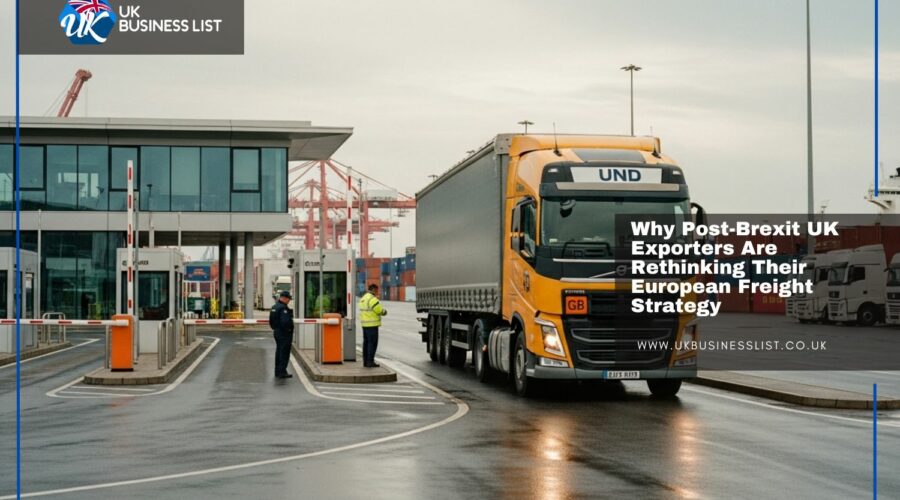
Why Post-Brexit UK Exporters Are Rethinking Their European Freight Strategy
Brexit changed everything for UK exporters. Not in dramatic ways you’d read about in newspapers, but in small daily frustrations that add up to serious costs.
Customs delays. Extra paperwork. Routes that no longer make sense. Carriers that suddenly can’t guarantee delivery times they promised for years.
UK businesses exported £208 billion worth of goods to the EU in 2023, according to the Office for National Statistics. That’s a lot of shipments crossing borders that now have checks, forms, and delays that didn’t exist four years ago.
Many exporters stuck with their old freight arrangements after Brexit. They assumed things would settle down. They’d adapt. The old ways would start working again.
They haven’t. And companies that export regularly are now making fundamental changes to how they move goods across Europe.
The Real Cost of Brexit Isn’t What You Think
Most people think Brexit costs come from tariffs or customs duties. Those hurt, yes. But the real damage is hidden in the small stuff, which is why working with specialists like International Forwarding, a leading UK freight forwarder with over 35 years of experience, has become essential for businesses navigating these new complexities.
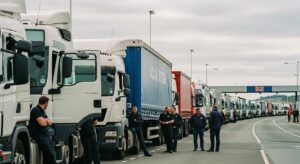
Delays at Dover now average 3 to 5 hours longer than pre-Brexit. That doesn’t sound catastrophic until you multiply it across hundreds of shipments. Your driver sits idle. Your customer waits. Your competitor who planned better gets there first.
Paperwork increased as estimated by roughly 215 million additional declarations per year for UK businesses trading with the EU, according to HMRC. Each declaration takes time. Someone must check it. Mistakes mean further delays.
Then there’s the unpredictability. Pre-Brexit, you could reliably quote delivery times. Now? A shipment to Germany might take three days one week and six days the next because of random checks, missing documentation, or port congestion.
This unpredictability is what’s forcing businesses to rethink everything.
Groupage Suddenly Makes Financial Sense
Before Brexit, many UK exporters sent part loads whenever they had enough goods to justify the cost. Quick. Simple. No planning required.
Post-Brexit, that approach bleeds money.
Every border crossing now involves customs clearance costs, whether you’re sending one pallet or twenty. The fixed costs stay the same. So, businesses are consolidating shipments to reduce the number of crossings.
Groupage services, where multiple customers share trailer space, have become far more popular. Instead of sending three separate half-loads across three weeks, companies now batch their European orders and ship once a week in a full load.
The maths works out. You save on customs fees, reduce per-unit transport costs, and your freight partner handles all the documentation in one go rather than three times.
Yes, it requires better planning. Yes, you need tighter inventory forecasting. But the cost savings are significant enough that most businesses find it worthwhile within a few months.
Customs Clearance Became Non-Negotiable Expertise
Pre-Brexit, you could hand goods to a carrier and forget about customs. Everything moved freely.
Not anymore. Every shipment needs proper customs documentation. Get it wrong and your goods sit at the border for days while you scramble to fix paperwork.
Many UK exporters initially tried handling customs themselves. It seemed simple enough. Fill in some forms, get a commodity code, declare the value.
Then they discovered how many ways you can get it wrong. Incorrect HS codes. Missing safety certificates. Wrong origin declarations. Each mistake costs time and money.
Smart businesses now work with carriers who have Authorised Economic Operator status. AEO certification means the freight company has proven systems for customs compliance and security. HMRC trusts them. Border officials process their shipments faster.
This isn’t about paying for premium services. It’s about reducing risk. One delayed shipment can cost you more than a year of slightly higher freight fees.
European Hubs Changed the Game
Some UK exporters now route goods through European distribution hubs rather than shipping directly from the UK.
Here’s why that makes sense. You ship bulk goods to a warehouse in the Netherlands or Belgium. One customs clearance. One set of paperwork. Then your European warehouse distributes to individual customers within the EU.
No customs delays on those final deliveries because they’re moving within the single market. Faster delivery times for your EU customers. Lower per-shipment costs because you’re only doing customs once.
This strategy works particularly well if you export regularly to multiple EU countries. The initial setup takes effort. You need warehouse space, inventory management systems, and reliable local distribution. But many businesses find their European delivery times improve so much that customers notice and appreciate it.
The downside? You tie up capital in inventory sitting in Europe. You pay for warehouse storage. And you need good forecasting to avoid stockouts or excess stock.
Still, for companies doing serious volumes into the EU, the trade-off often makes sense.
Different Routes for Different Goods
Brexit forced exporters to think more strategically about transport modes.
Air freight volumes from the UK to Europe jumped 23% in 2022 compared to 2019, according to the Freight Transport Association. Why? Because for high-value, time-sensitive goods, paying extra for air cargo costs less than the risk of delays at Dover.
Pharmaceutical companies, electronics manufacturers, and fashion retailers increasingly use air freight for their European shipments. The premium price hurts. But missing a product launch or letting prescription medicines expire in customs costs more.
Meanwhile, businesses shipping bulk goods with less time pressure stick with road freight but plan longer lead times. They accept that UK to Germany might take five days instead of two. They build that into their quotes and delivery promises.
Sea freight to European ports has also grown for certain products. It’s slower than road but avoids the Dover bottleneck entirely. Container shipments from UK ports directly to Rotterdam or Hamburg bypass the most congested crossing points.
No single mode works for everything anymore. Successful exporters now mix and match based on product characteristics, urgency, and destination.
Documentation Standards Tightened Dramatically
Sloppy paperwork that customs officials might have overlooked pre-Brexit now stops your shipment cold.
Commodity codes must be precise. A minor error in your HS classification and your goods get rejected at the border. You need the correct safety certifications, especially for electronics, chemicals, or food products.
Rules of origin matter intensely now. To benefit from zero-tariff trade under the UK-EU Trade and Cooperation Agreement, you must prove where your goods were made or substantially transformed. Get it wrong and you pay tariffs you didn’t expect.
Many businesses now employ dedicated export compliance staff or outsource this to specialists. The cost seems high until you compare it to the cost of one major shipment stuck at customs for a week.
Documentation mistakes don’t just delay individual shipments. They damage your reputation with customers and can trigger more frequent inspections on future shipments. Border officials remember companies that repeatedly submit incorrect paperwork.
Getting it right for the first time is no longer optional.
Carrier Relationships Matter More Than Ever
Pre-Brexit, you could ring around for quotes and pick whoever was cheapest that week. Freight was mostly a commodity.
Not anymore. Your carrier choice now affects your entire export operation.
Carriers with strong European networks deliver goods faster and more reliably. They have established relationships with customs brokers at key crossing points. Their trucks get priority boarding. They know which routes avoid the worst congestion.
Businesses are also prioritising carriers who invest in technology. Real-time tracking isn’t a nice extra anymore. It’s essential. You need to see where your goods are and get alerts if there’s a problem before your customer rings asking where their delivery is.
Communication quality matters too. When something goes wrong, and it will go wrong occasionally, you need a carrier who picks up the phone and tells you what’s happening. Not one who leaves you chasing updates for hours.
Many UK exporters have consolidated from five or six carriers down to one or two trusted partners. They’re paying slightly more but getting consistency, reliability, and better service.
The cheapest quote rarely delivers the best value in the post-Brexit world.
Planning Horizons Extended
UK manufacturers used to run lean operations with minimal inventory. Just-in-time delivery worked beautifully when European freight moved smoothly.
Brexit killed just-in-time for many businesses.
When delivery times vary by several days and customs delays are unpredictable, you can’t rely on shipments arriving exactly when you need them. Companies now hold more buffer stock. They plan European orders further ahead. They build contingency into their production schedules.
This ties up more capital. Storage costs increase. But the alternative is worse. Running out of stock because a shipment got held up at customs costs you sales, damages customer relationships, and often forces expensive emergency air freight to fix the problem.
The exporters adapting best are those who accepted that their old operational model doesn’t work anymore and invested in new planning systems and processes.
What Successful Exporters Do Differently

The businesses thriving post-Brexit aren’t necessarily the biggest or best funded. They’re the ones who made clear strategic decisions about how to handle the new reality.
They work with freight specialists who understand EU regulations and customs processes inside out. They invested time in getting their documentation systems right. They adjusted their customer delivery promises to reflect realistic post-Brexit timelines rather than pretending nothing changed.
They review their freight strategy quarterly, not annually. Routes that worked six months ago might not work now. Carrier performance shifts. New border procedures get introduced. Staying on top of these changes matters.
Most importantly, they stopped hoping things would return to how they were. They accepted the new normal and built systems designed for it.
Brexit created friction in UK-EU trade. That friction isn’t going away. But it’s manageable if you approach it strategically rather than hoping for the best and reacting to problems as they arise.
Your freight strategy needs to match the reality of trading in 2026, not the way things worked in 2018.

As the Chief of Marketing at the digital marketing agency ClickDo Ltd I blog regularly about technology, education, lifestyle, business and many more topics.