
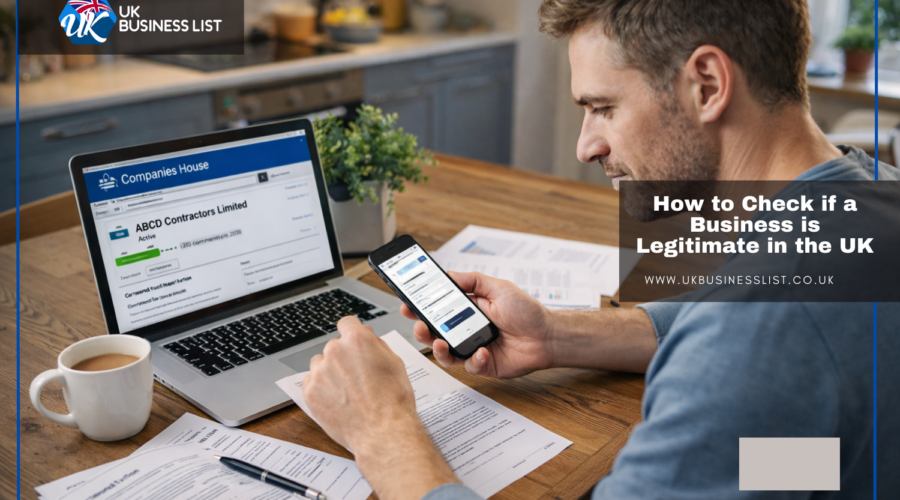
How to Check if a Business is Legitimate in the UK
Business fraud is at record levels in the UK.
This makes it crucial for individuals to know how to check if a business is legitimate before handing over money or sensitive data.
More than 2,000 new companies are registered daily across the UK, which means due diligence is no longer optional. (mobunti)
Still, 47% of UK homeowners say they find it hard to search for a sole trader. (Home Owners Alliance)
The Need to Check if a Business Is Legitimate — Stats
- Fraud now accounts for 41% of all crime in the UK. In 2024, over 3.3 million fraud cases were reported, with losses of £1.17 billion, which is a 12% rise from the previous year. (UKFinance)
- UK homeowners spend an estimated £3.5 billion annually fixing damage left by ‘rogue traders’. (The Guardian)
- Only one in eight fraud cases are reported. Many incidents go unrecorded, which makes the real impact of fraud far greater than official data shows. (ONS)
Checking Business Legitimacy in The UK – Trends
- AI-powered scams are on the rise. More than half (54%) of UK adults are worried about deepfake scams and AI-driven fraud. (FinancialIT)
- By 2026, all new company directors in the UK will undergo digital ID checks, which closes a loophole that has allowed fake companies to thrive in the UK. (UK Government)
- More than 75% of UK shoppers (millennials and Gen Z) are happy to pay more to brands whose reputation they can trust. (Tink)
How to Check if a Business Is Legitimate
- The official Companies House register is free and open to all. Search for a business by name or company number to check its registered address, directors, and filing history.
- UK businesses with turnover above £90,000 must register for VAT. Use the official HMRC VAT checker to validate the VAT number and see if it matches the business name and address HMRC.
- Check the business address using Google Maps or Street View. Be cautious if the address is a virtual office, PO box, or if several companies are listed at the same address.
- For financial services, insurance, and investment, check the FCA’s Financial Services Register. Avoid any business not listed or appearing on the FCA’s warning list FCA Register.
- For tradespeople, look for TrustMark, Gas Safe Register, or industry accreditations TrustMark.
- Check for reviews on sites like Trustpilot, Google Reviews, and other platforms. Look for consistent complaints about scams or non-delivery. For local services, regional Facebook groups or Nextdoor can be helpful Trustpilot.
- Legitimate companies will have real, active employees with credible profiles on LinkedIn. Beware of businesses with no visible staff or only generic/fake-looking profiles.
Want to check a sole trader in the UK? See our guide: How to Find Legitimate Sole Traders in the UK.
Business fraud is a real risk for everyone in the UK.
Consumers should use official tools, check business credentials, and apply common sense while shopping offline or online.
Please let us know if you have more information you’d like to share about this subject.
Disclaimer: All the information provided was correct at the time of publication and was collected with the help of accredited tools and AI.

Covering unique UK business stories, business advice and news to keep the UK Business List audience informed!