

Nursing Degree UK Routes: Entry Requirements, Funding, and Career Paths
For aspiring registered nurses, completing an approved UK nursing degree is the primary university option.
Before you apply, it is vital to compare different courses, funding opportunities, entry requirements, and long-term career routes.
Use NHS Health Careers, UCAS, the Nursing and Midwifery Council (NMC), and individual university course pages as your starting points.
How to compare courses and where to study nursing in UK
Start with NHS Health Careers to check approved routes and clinical specialisms. From there, you can compare general UCAS listings directly against specific university pages. For example, a traditional institution will highlight a campus-based nursing degree in the UK, while The Open University helps you review flexible, remote healthcare study options.
Course pages often sound identical at first glance, so you must look past the headline details. Before making a final choice, verify the NMC approval status, clinical placement model, admissions criteria, and the level of student support offered.
How to apply for a nursing UK programme

Balancing academics and placements is notoriously difficult. When you are juggling long 12-hour shifts alongside demanding coursework, using a reliable nursing paper writing service can provide necessary assistance to help you manage tight deadlines. This kind of professional academic support allows busy students to maintain their grades while focusing their primary energy on hands-on clinical training.
Most students apply to university nursing courses directly through UCAS. Your application normally covers your academic qualifications, chosen courses, professional references, and a detailed personal statement. You should use this statement to explain exactly why nursing fits you and how your past experiences support that career choice.
After submitting, providers will review your entry requirements, communication skills, values, and readiness for placement learning. If you pass this initial screening, you will likely be asked to attend an interview or selection activity.
To prepare, gather concrete examples from care work, volunteering, paid employment, family responsibilities, or public-facing roles. Focus entirely on moments when you stayed calm under pressure, took responsibility for a problem, and treated people with respect.
Understanding values-based recruitment in nursing
Strong grades alone will not carry a UK nursing application if your attitude clashes with professional care standards. Nursing relies heavily on compassion, teamwork, respect, and dignity in everyday interactions, not just during high-stakes medical emergencies.
This is a concept worth taking seriously before you step into an interview room. Assessors may ask how you handled a difficult person, supported someone who was highly anxious, or admitted a personal mistake. They want to understand your clinical judgement and accountability, rather than just hearing a rehearsed speech about wanting to care for people.
Financial support for your nursing degree UK

Check the NHS Learning Support Fund early, alongside your standard student finance applications. It can offer substantial extra financial help for eligible students, but you must confirm the latest rules, eligibility criteria, and deadlines before you count on that money.
Tuition is only one part of the overall cost. You must also budget carefully for accommodation, placement travel, uniform maintenance, childcare, and lost work hours. When you compare nursing courses in the UK, look at the total cost of attendance first. Once you have that figure, ask each provider about placement travel expenses, hardship funds, and disability-related financial adjustments.
Flexible and online nursing study options
Flexible study works incredibly well for working applicants, parents, and career changers who cannot commit to a traditional timetable. Even so, nursing UK training still legally requires supervised clinical placements. Theoretical study alone cannot qualify you for a registered NHS practice.
For people already employed in health or social care, distance learning courses offer a viable alternative worth checking. You will need to ask whether your current employer can support your placement access, study time, and clinical assessments. Remote learning may cover your lectures and academic tasks, but your practical competence must still be observed directly in real care settings.
Alternative routes into registered nursing
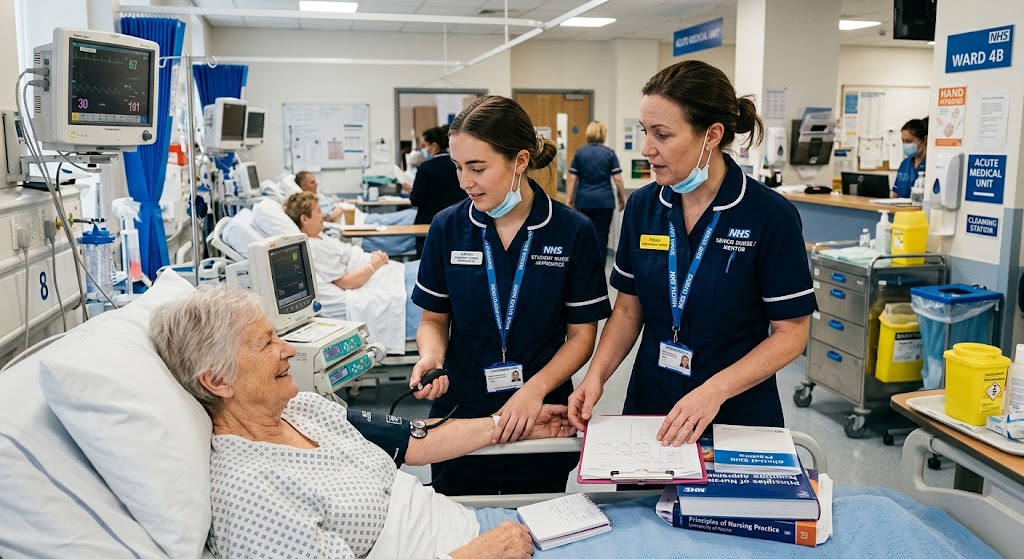
A traditional university course is not the only way into the profession. Through the Registered Nurse Degree Apprenticeship, eligible learners can work while training toward a nursing degree. This provides a salary and support built directly into the workplace route, though available places depend heavily on employers, local workforce plans, and strict entry criteria.
For many applicants, the best first step is securing a basic healthcare role. Some build their nursing qualifications gradually over several years before moving further up the ladder. Employer-supported training may help significantly if you already work in the NHS or social care, especially when you can prove your reliability and study discipline.
The nursing associate pathway
The Nursing Associate role gives you a foundation-level route sitting directly between healthcare assistant work and registered nursing. It helps you build formal nursing qualifications while gaining highly relevant experience in fast-paced clinical settings.
While it does not give you registered nurse status immediately, it acts as a perfect steppingstone. Many learners use this route to gain clinical confidence, placement experience, and academic readiness before progressing up the NHS career ladder. If you take this route, check whether the programme includes a recognised bridge directly into registered nurse training.
What your clinical nursing training includes
Nursing training blends traditional classroom study with clinical placements, simulation exercises, skills assessments, and reflective academic work. The theory side typically includes anatomy, pharmacology, public health, safeguarding, evidence-based practice, and professional NMC standards.
On placement, you must show how well you use that theoretical learning with real patients under strict supervision. You should expect long rotational shifts, patient documentation, critical feedback, and practical skills checks. It can feel incredibly intense because your academic knowledge and professional judgement are developing at the exact same time.
What happens after you finish your nursing training
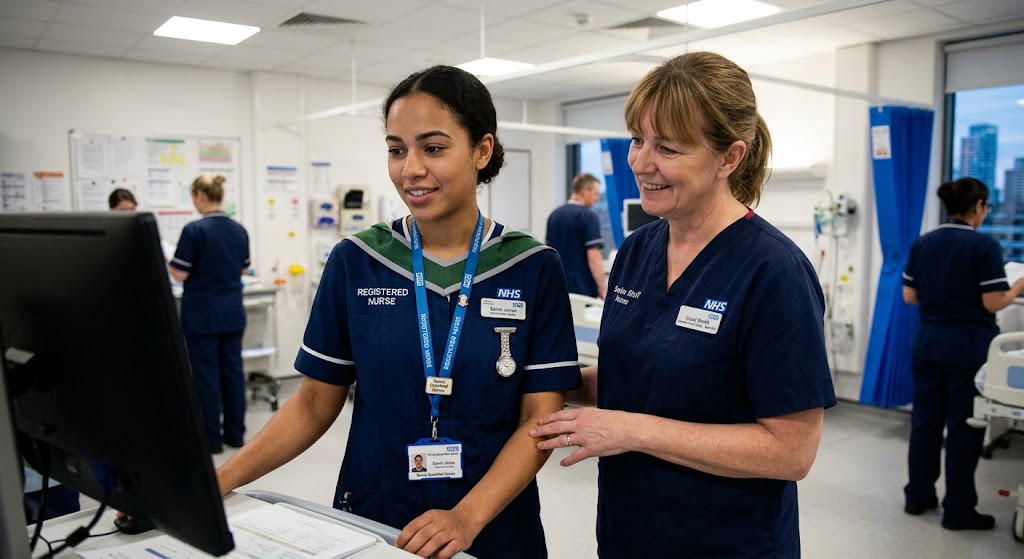
Once you finish an approved programme, the immediate next step is Nursing and Midwifery Council registration. You must successfully complete this administrative step before legally practising as a registered nurse. The NMC maintains the national register and sets professional standards, meaning this process is far more than just a simple formality.
From there, many newly qualified nurses start in Band 5 staff nurse posts within an NHS or private healthcare setting. Employers often provide structured preceptorship support to help you move from student status into fully accountable practice. You should treat that preceptorship period as a safe chance to ask questions, test your clinical judgement, and build workplace confidence.
Taking your first career steps in the NHS
Many graduates start their first job search on NHS Jobs, but a generic job title only tells you so much about the role. You must check the specific ward type, rotation options, preceptorship quality, shift patterns, and development support before hitting apply.
Once you are settled in a staff nurse post, your path can branch out in several exciting directions. You might move into critical care, community nursing, children’s services, mental health teams, practice nursing, or clinical education. Continuing your professional development helps you keep your skills current while working toward a promotion or a highly specialised clinical role.
Frequently asked questions
How many years is a nursing degree in the UK?
A full-time UK-registered nursing university route usually takes three years to complete. Part-time study, apprenticeships, and prior-learning routes may take considerably longer, and overall timescales can vary by provider.
Can I train as a nurse at 40?
You can absolutely train as a nurse at 40, provided you meet the academic, health, character, and selection requirements for your chosen route. Many mature applicants bring incredibly valuable life experience from paid work, caring responsibilities, parenting, or community volunteering.
How difficult is a nursing degree in the UK?
A nursing degree can feel exceptionally tough because academic study, clinical placements, practical assessments, and emotional pressure all compete for your energy at the same time.
What entry requirements do nursing courses UK usually ask for?
Universities usually look for academic qualifications (like A-levels or BTECs), proof of English and maths proficiency, a compelling personal statement, references, health checks, and criminal character checks.

Passionate content designer, contributor and content marketing allrounder at ClickDo.