

Legionella Control: 5 Key Things Every Business Must Know
Industry insights from Craig Taylor at Absolute Water Compliance – a water safety specialist with over 20 years’ experience
Legionella bacteria, which can cause Legionnaires’ disease, can multiply in man-made water systems if conditions are not properly controlled. While outbreaks are relatively rare, the impact can be severe, leading to illness, legal consequences, reputational harm, and even business disruption.
With over two decades of practical experience in water safety and compliance, Craig from Absolute Water Compliance has seen the difference between organisations that take a proactive approach and those that overlook the warning signs.
This guide sets out five essential things every business must know about Legionella control.
1. Legionella Risk Exists Everywhere

It’s a common misconception that Legionella is only a problem in hospitals or leisure centres. In reality, the bacteria can be present in almost any building with a water system. Legionella thrives where water is stagnant, warm, and poorly circulated.
Examples of environments at risk include:
- Care homes and hospitals – residents often have compromised immunity, making infections far more dangerous.
- Hotels, gyms, and spas – showers, hot tubs, and spa pools can generate aerosols, which increase exposure risk.
- Factories and offices – cooling towers, storage tanks, and unused outlets are all potential breeding grounds.
Even if your premises don’t serve the general public, you still have a duty to protect staff, contractors, and visitors. Any building with running water must consider Legionella control.
Legionella thrives in still stagnant water and can multiply quickly in places like hot water tanks, plumbing pipes, cooling towers, fountains, and even hot tubs. Showers and faucets can also become breeding grounds, especially if there’s rust, scale, or slime (known as biofilm) for the bacteria to cling to. The problem isn’t in drinking the water; it’s when tiny droplets get into the air and are breathed in, like the mist from a shower or steam rising from a spa.
Because Legionella grows best between 20°C and 50°C (68°F–122°F), and thrives when maintenance and building materials are poor, buildings in hospitality like hotels, hospitals, and large apartments, are especially at risk if their water systems aren’t carefully managed. In the right conditions, the hidden bacteria can quietly spread, turning an everyday shower or relaxing soak into a potential health hazard.
2. Legal Duties Under UK Law
Employers and those in control of premises have a clear legal responsibility to manage the risk of legionella. This duty falls under the Health and Safety at Work Act 1974 and the COSHH Regulations 2002.
Your responsibilities include:
- Carrying out a Legionella Risk Assessment – a systematic review of water systems to identify risks.
- Appointing a Responsible Person (Duty Holder) – someone competent to manage and oversee ongoing controls.
- Developing a Written Scheme of Control – a documented plan that sets out how monitoring, inspections, and remedial actions will be managed.
Failure to meet these obligations can result in enforcement action, financial penalties, or even prosecution. Beyond legal consequences, the human impact of an outbreak can be devastating.
3. Risk Assessments Must Be Competent & Ongoing

A legionella risk assessment is not just a paperwork exercise; it requires technical knowledge of water systems, bacterial growth conditions, and control methods. That’s why it should only be carried out by a competent person with the right training and experience.
An effective assessment will:
- Identify dead legs or unused pipework where water can stagnate.
- Check temperature ranges, Legionella thrives between 20–45°C.
- Pinpoint high-risk outlets such as showers, spray taps, and cooling towers.
- Consider the health profile of building users, for example, elderly or immunocompromised occupants.
Importantly, this isn’t a one-off activity. Your risk assessment should be reviewed regularly or when one of the below becomes apparent:
- Water systems are modified or extended.
- Building usage changes (e.g., more staff working remotely).
- There are extended periods of disuse (holidays, shutdowns, COVID-style closures).
4. Remedial Action Is Essential
Identifying risks through a Legionella risk assessment is the first crucial step in keeping water systems safe. However, this process often highlights areas that require remedial action, and this is where many businesses fall short. Remedial work isn’t just a box-ticking exercise; it’s essential for both compliance and safety.
Some of the most common remedial measures include cleaning and disinfecting tanks or pipework to remove bacterial build-up, removing unused or redundant pipework to prevent water from stagnating, regularly flushing outlets that aren’t often used, and ensuring effective temperature control, keeping cold water below 20°C and hot water consistently above 50°C.
While these tasks may sound straightforward, they require careful planning, consistent scheduling, and proper documentation to truly be effective. Ignoring even small risks can allow problems to escalate, turning what seems like a minor maintenance issue into a serious health hazard.
Common remedial actions – a summary.
- Cleaning and disinfecting tanks or pipework to eliminate bacterial build-up.
- Removing redundant pipework to prevent stagnation.
- Regular flushing of outlets that are rarely used.
- Temperature control ensures cold water stays below 20°C and hot water consistently reaches above 50°C.
These measures may sound simple, but in practice, they require planning, scheduling, and proper documentation to be effective. Left unchecked, even small risks can grow into significant hazards.
5. Ongoing Monitoring for Long-Term Safety
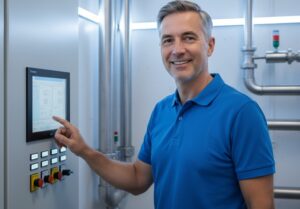
In many cases, especially in older or complex buildings. It’s impossible to remove every single Legionella risk. That’s why monitoring is a cornerstone of effective control.
Robust monitoring should include:
- Routine temperature checks across outlets and storage tanks.
- Regular inspections of tanks, taps, showers, and cooling towers.
- Water sampling and laboratory testing in higher-risk environments.
Every check, flush, or inspection must be recorded. These records don’t just prove compliance, they also highlight early warning signs, allowing issues to be addressed before they become serious.
Legionella control lays the foundations in ensuring your business is compliant against legionella outbreaks and helps to create controllable steps to take to ensure that your business meets both the legal requirements and the duty of care required. By investing in risk assessments carried out by industry specialists, timely remedial work, and ongoing monitoring, businesses can:
- Protect people’s health and wellbeing
- Safeguard their reputation and credibility
- Avoid costly enforcement action and disruption
A structured water safety strategy, backed by accurate records and regular reviews, sends a strong message to staff, stakeholders, and customers: safety matters here.

Covering unique UK business stories, business advice and news to keep the UK Business List audience informed!