
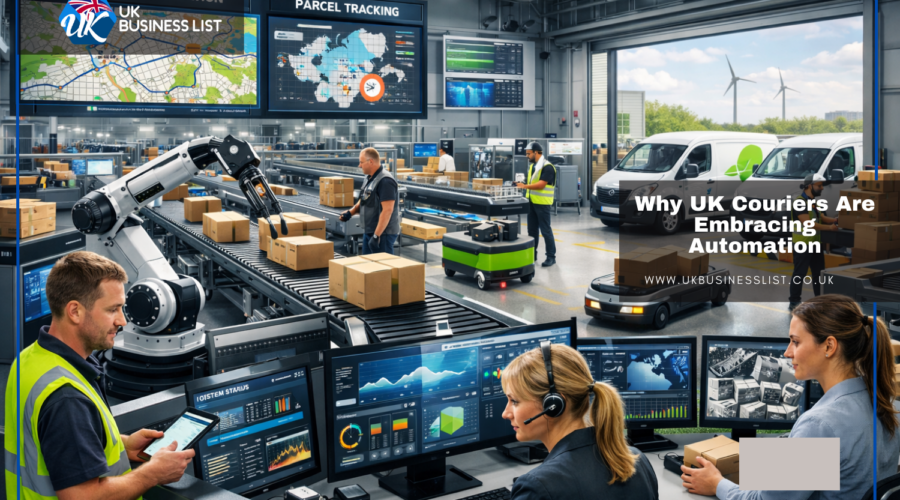
Why UK Couriers Are Embracing Automation
The UK courier sector has undergone rapid transformation over the past decade.
E-commerce growth, same-day delivery expectations, labour shortages, and rising fuel costs have forced operators to rethink how parcels move from warehouse to doorstep.
Automation is no longer experimental—it is now central to operational strategy.
From automated sorting hubs to AI-driven route planning, UK courier companies are investing heavily in technologies that reduce cost per parcel while improving delivery speed and accuracy.
E-Commerce Growth and Volume Pressure
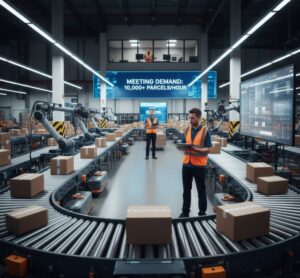
Parcel volumes in the UK have surged due to online retail expansion. Next-day and even same-day delivery have become baseline expectations rather than premium services. Manual systems struggle to scale under these conditions.
Automation addresses throughput constraints by increasing processing speed and reducing human error. Automated sortation systems can process tens of thousands of parcels per hour, using barcode scanning and conveyor-based diverters to route items to correct distribution channels.
At the operational level, automation improves:
- Sorting accuracy through optical scanning and machine vision
- Throughput capacity without proportional labour increases
- Real-time tracking and inventory visibility
By reducing bottlenecks, courier companies maintain service-level agreements even during peak periods such as Black Friday or Christmas.
Warehouse Robotics and Smart Hubs
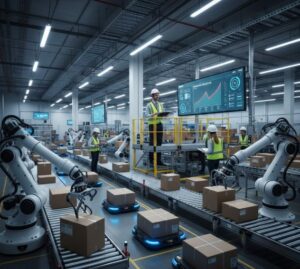
Modern courier depots increasingly resemble automated manufacturing facilities. Robotics systems handle repetitive tasks such as parcel induction, palletizing, and container unloading.
Automated guided vehicles (AGVs) move containers across warehouse floors without human operators. Robotic arms equipped with machine vision identify parcel dimensions and orientation before sorting.
Smart hubs integrate:
- IoT-enabled sensors to monitor conveyor performance
- Predictive maintenance systems to reduce downtime
- Automated dimensioning systems for volumetric pricing accuracy
These technologies improve operational resilience. Predictive analytics detect mechanical wear before system failure occurs, preventing costly shutdowns.
Automation also enables precise volumetric measurement, ensuring that billing reflects parcel size accurately—a critical factor in margin management.
Route Optimization and AI Logistics
Last-mile delivery remains the most expensive segment of courier operations. Fuel, vehicle wear, and driver time significantly impact profitability.
Advanced route optimization software uses real-time traffic data, delivery density analysis, and predictive modeling to reduce mileage and idle time. Artificial intelligence evaluates variables such as weather conditions, delivery windows, and vehicle capacity constraints.
AI-powered systems optimize:
- Delivery sequencing for reduced fuel consumption
- Dynamic rerouting during traffic disruptions
- Load balancing across driver networks
By compressing delivery routes, companies lower fuel costs and reduce carbon emissions. In dense urban environments like London or Manchester, minor route improvements translate into substantial operational savings.
Labour Market Pressures
The UK logistics sector faces persistent driver shortages. Recruitment challenges, regulatory requirements, and rising wage expectations increase operational strain.
Automation offsets labour dependency. While human drivers remain essential for last-mile delivery, upstream processes—sorting, scanning, dispatch preparation—can be largely automated.
Automated systems reduce the need for:
- Manual parcel sorting
- Data entry clerks
- Repetitive warehouse handling roles
Rather than eliminating jobs entirely, automation often shifts workforce demand toward technical roles such as systems monitoring, robotics maintenance, and data analysis.
This shift aligns logistics operations with broader digital transformation trends.
Data Integration and Platform Connectivity

Modern courier automation is not limited to physical machinery. Digital infrastructure is equally critical. Integration between courier management systems, e-commerce platforms, and customer interfaces allows seamless information flow.
Companies increasingly connect with technology platforms like Spoke to streamline communication, enhance operational visibility, and manage distributed workforce coordination. Digital connectivity ensures that dispatch teams, drivers, and customer service representatives operate from synchronized data sets.
Centralized dashboards provide real-time insights into parcel status, driver location, and delivery performance metrics. This reduces communication friction and improves issue resolution speed.
End-to-end data transparency enhances both internal efficiency and customer experience.
Sustainability and Carbon Reduction
Environmental regulation and consumer expectations are accelerating sustainability initiatives within UK courier networks.
Automation contributes to carbon reduction by optimizing routes and minimizing idle time. Electric vehicle (EV) fleet integration further depends on digital route planning to manage battery range effectively.
Automated systems support sustainability through:
- Energy-efficient warehouse operations
- Reduced paper documentation via digital tracking
- Smart vehicle routing to lower emissions
Advanced analytics help companies model emissions impact across delivery networks, enabling compliance with carbon reporting requirements.
Automation therefore serves both economic and environmental objectives.
Security and Compliance Improvements
Parcel theft, misrouting, and data breaches pose significant risks in courier operations. Automation improves security through traceability and system-controlled workflows.
Barcode scanning at each transfer point creates a digital audit trail. Automated access controls restrict entry to high-value storage zones. Surveillance systems integrated with AI-based anomaly detection enhance warehouse security.
Compliance with data protection regulations, including UK GDPR, also depends on secure digital architecture. Automated systems incorporate encryption protocols and access controls that protect customer information throughout the delivery lifecycle.
By reducing manual handling and paperwork, automation minimizes opportunities for human error and data compromise.
Competitive Differentiation
Courier companies operate in a highly competitive environment with thin margins. Speed, reliability, and cost efficiency determine market share.
Automation enables:
- Faster delivery commitments
- Lower operational cost per parcel
- Greater delivery accuracy
Companies that fail to invest risk falling behind competitors with more agile, technology-driven networks.
Investment in automation also strengthens resilience during demand spikes or workforce disruptions. Scalable infrastructure allows operators to absorb growth without proportional increases in overhead.
The Financial Case for Automation
Although automation requires significant capital expenditure, long-term returns justify the investment. Reduced labour costs, lower fuel consumption, improved accuracy, and minimized downtime collectively enhance margins.
Return on investment is typically measured through:
- Cost per parcel reduction
- Increased parcel throughput
- Decreased error-related claims
- Improved on-time delivery rates
Over time, automation shifts courier operations from labour-intensive models to data-driven logistics ecosystems.
Conclusion
UK courier companies are investing in automation because the economics of parcel delivery demand it. Rising e-commerce volumes, labour shortages, environmental targets, and customer expectations leave little room for manual inefficiencies.
Through robotics, AI-powered route optimization, predictive maintenance, and integrated digital platforms, automation enhances speed, accuracy, and scalability. The result is a logistics infrastructure capable of meeting modern delivery demands while maintaining cost control and operational resilience.
Automation is not a future ambition for UK couriers—it is now a core operational necessity.

Passionate content designer, contributor and content marketing allrounder at ClickDo.